physicskit: Computational Physics in Python#
physicskit is a unified scientific toolkit for computational physics,
spanning 14 domains – from stellar dynamics to quantum
entanglement – under one NumPy-based API. It’s built for physics students
working through a textbook problem, curious learners exploring a topic
on their own, and educators building a demonstration: every subpackage
is called, tested, and visualized the same way, so moving from classical
mechanics to condensed matter to general relativity means picking up new
physics, not a new set of conventions. Units stay native to the field
instead:
\(G=1\) for orbits, \(\hbar=1\) for quantum states, \(k_B=1\)
for statistical mechanics, matching how the papers you’re checking against
actually write it, rather than forcing everything through SI.
Units and conventions lists each
subpackage’s convention and shows how physicskit.units converts
results to SI once you choose the physical scale.
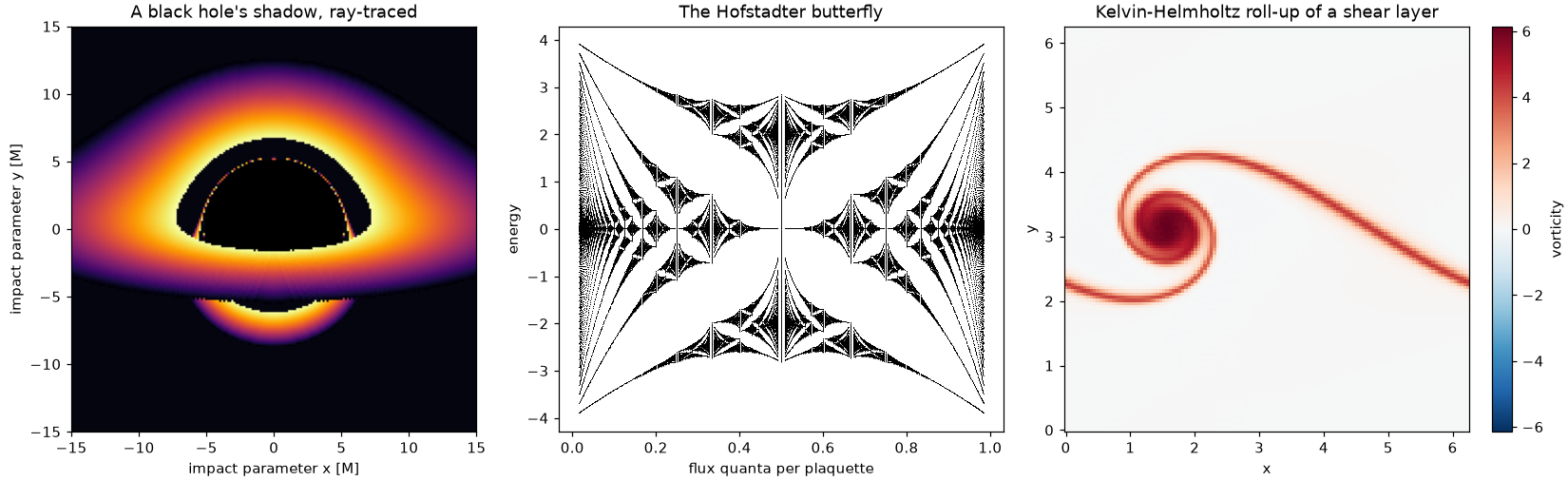
Every subpackage is grounded in the physics it implements, not just coded against it: public functions carry runnable, CI-checked examples, and each subpackage’s history page traces the breakthroughs behind it – from Huygens’ 1690 wave construction to the 2017 GW170817 neutron-star chirp – each one linked to the code that reproduces it. The goal is a toolkit you can trust to move between domains without re-deriving the plumbing every time:
physicskit.astro– stellar structure, N-body dynamics, orbital mechanics, galactic dynamics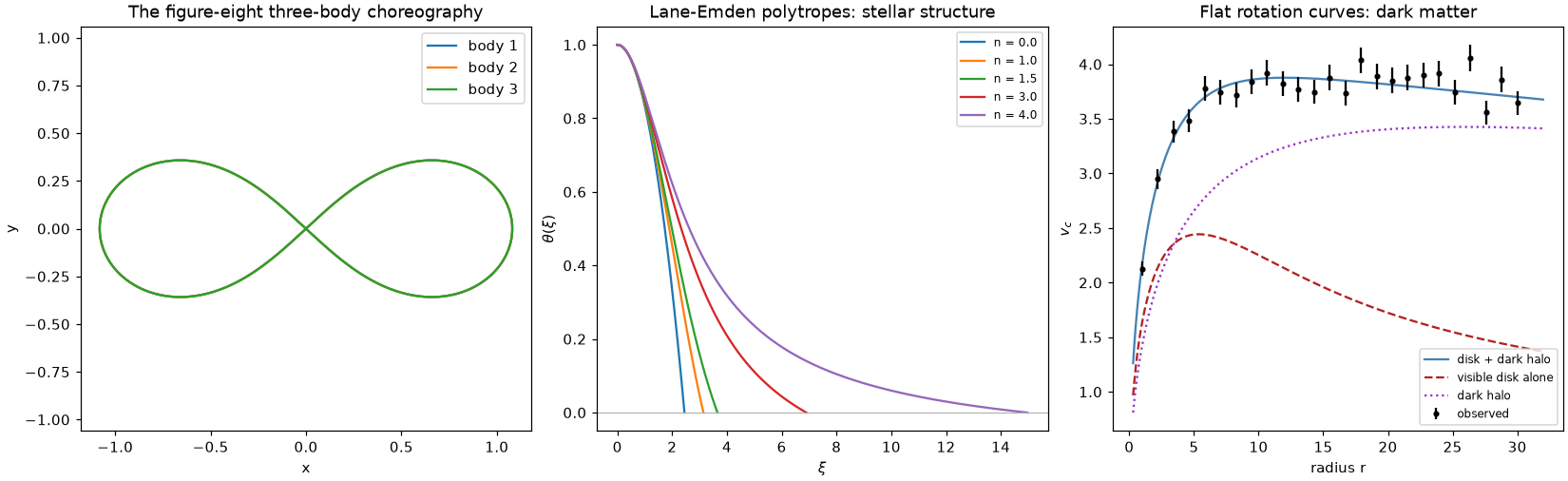
physicskit.chaos– chaotic dynamical systems and 2D quantum billiards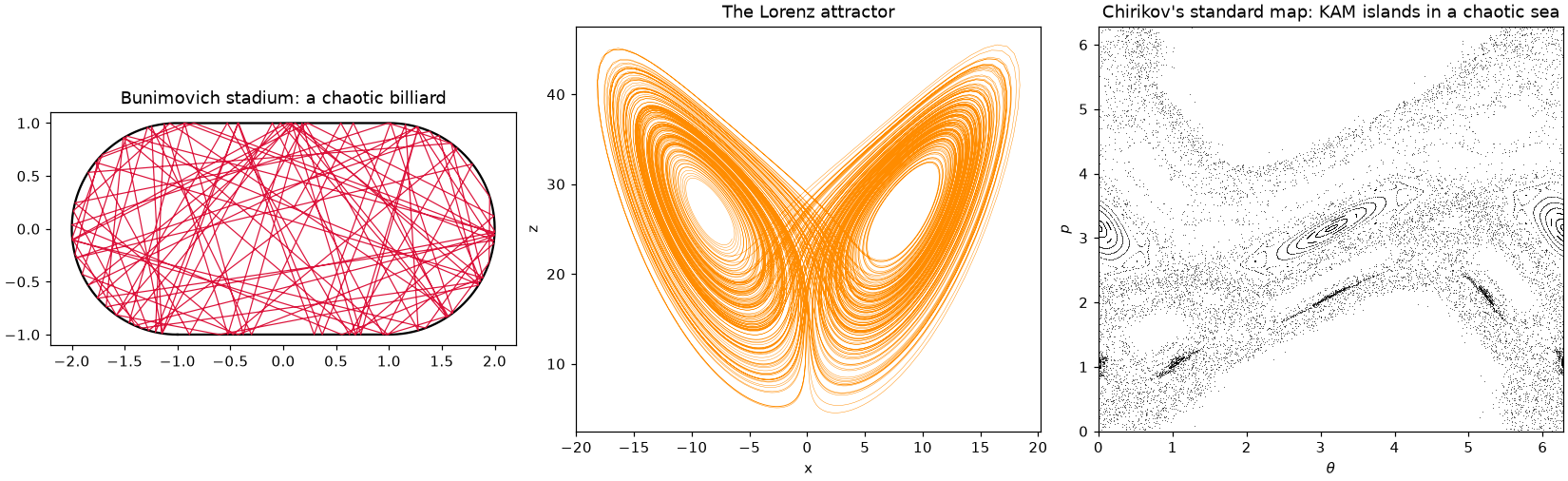
physicskit.classical– classical (Newtonian/Lagrangian/Hamiltonian) mechanics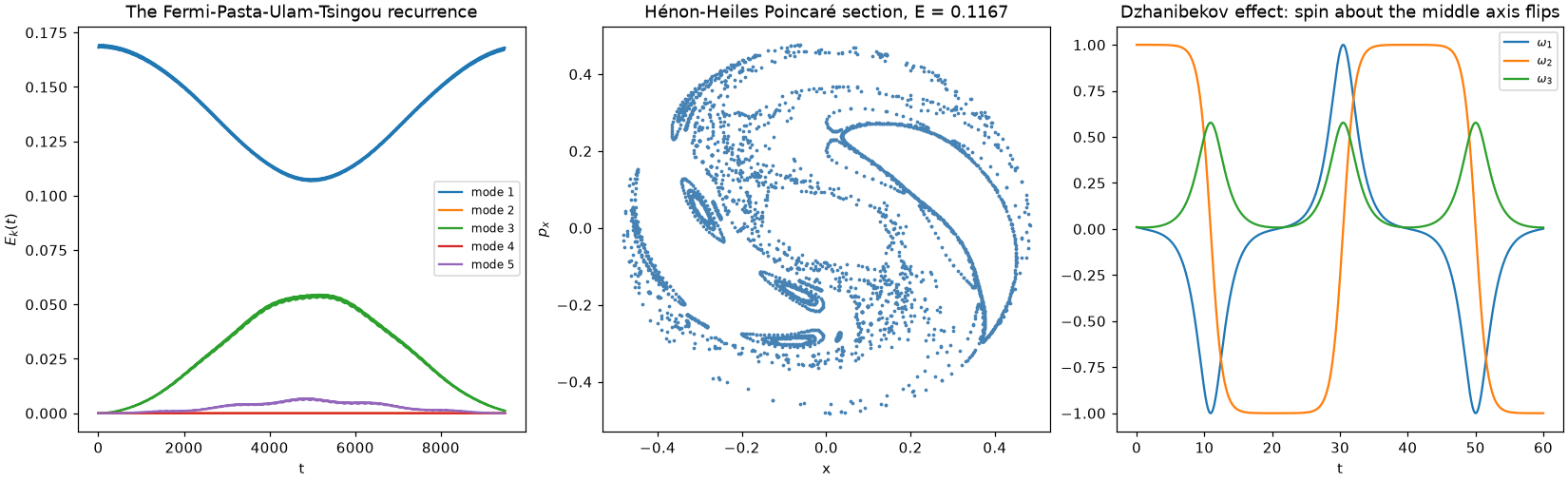
physicskit.condensed– tight-binding models, topological band theory, superconductivity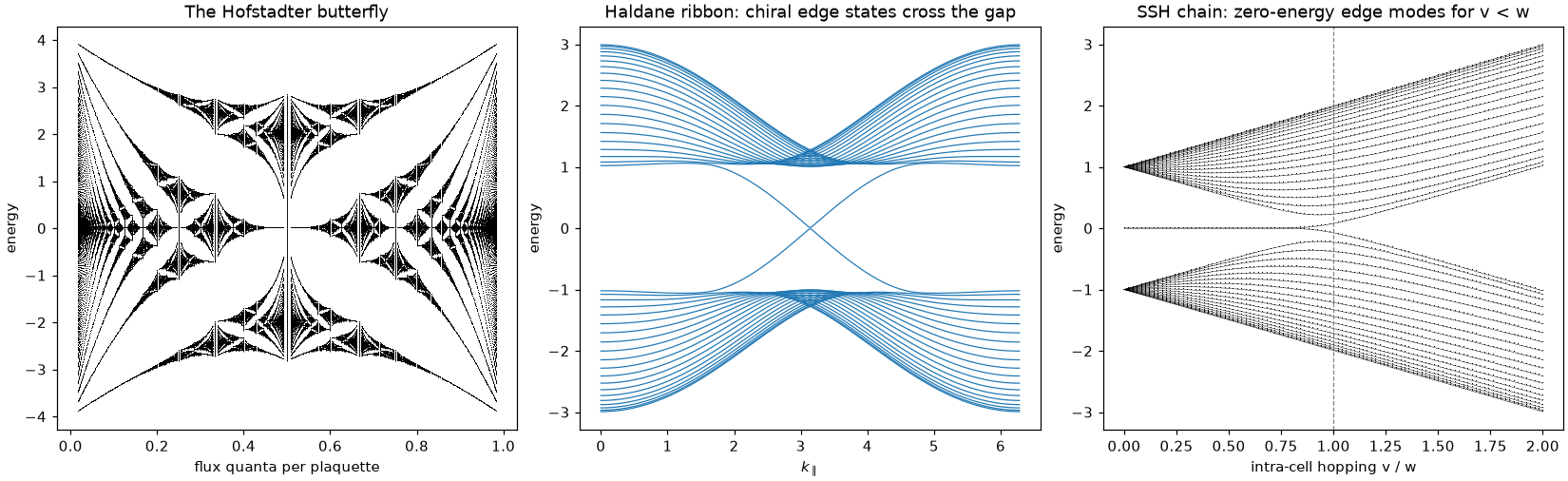
physicskit.fields– electrodynamics (FDTD), solitons, BEC vortex lattices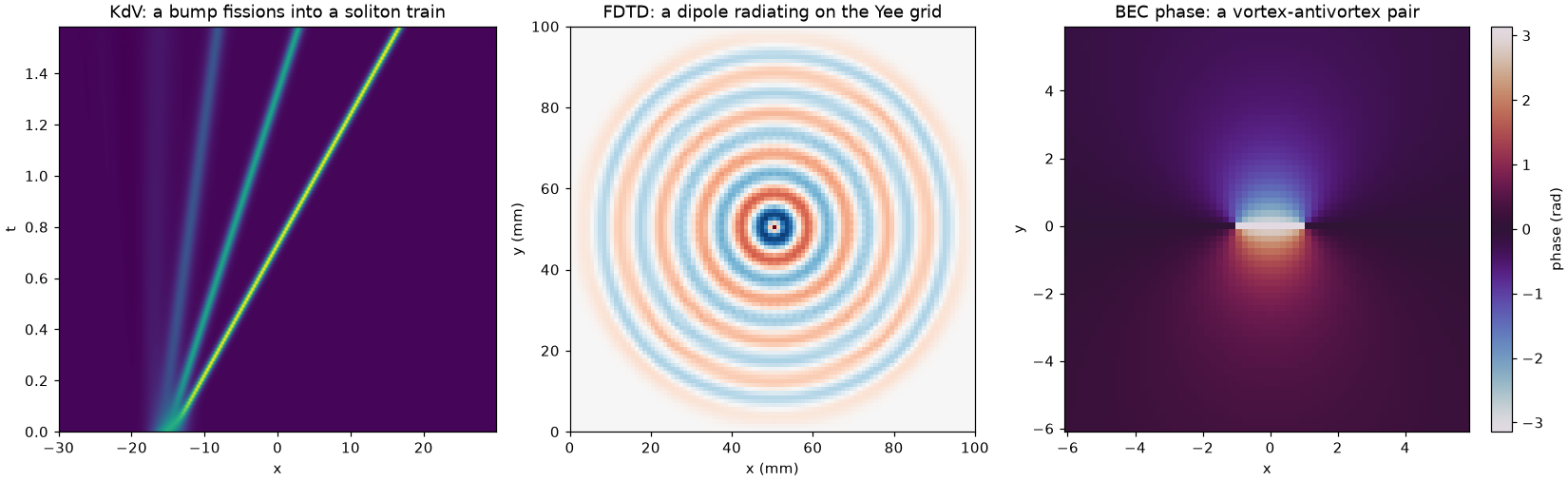
physicskit.fluids– potential flow, viscous flow, vortex dynamics, instabilities, compressible flow, Navier-Stokes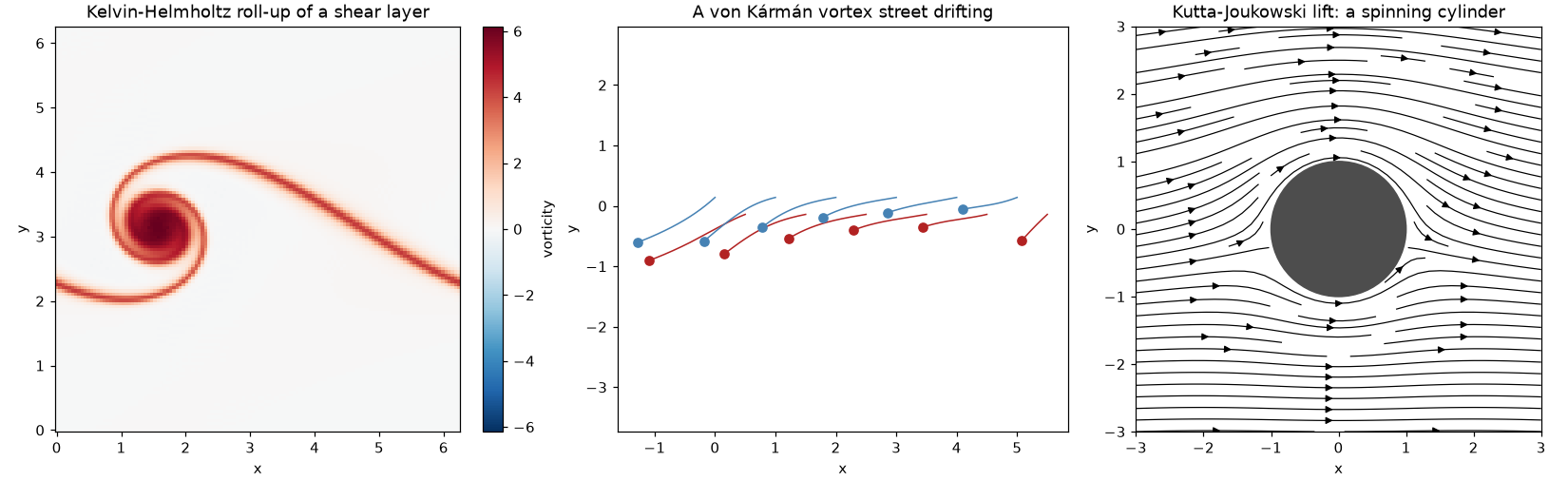
physicskit.optics– ray/wave/Gaussian-beam optics, Wigner functions, Jaynes-Cummings dynamics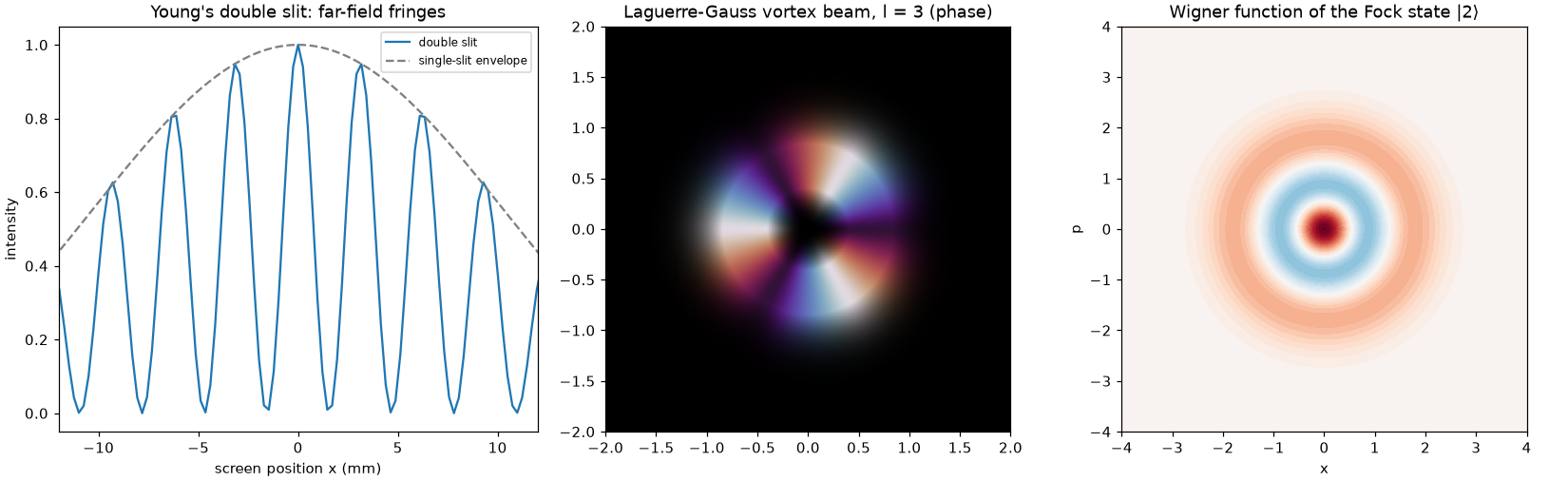
physicskit.particle– relativistic kinematics, two-body decays, scattering, nuclear physics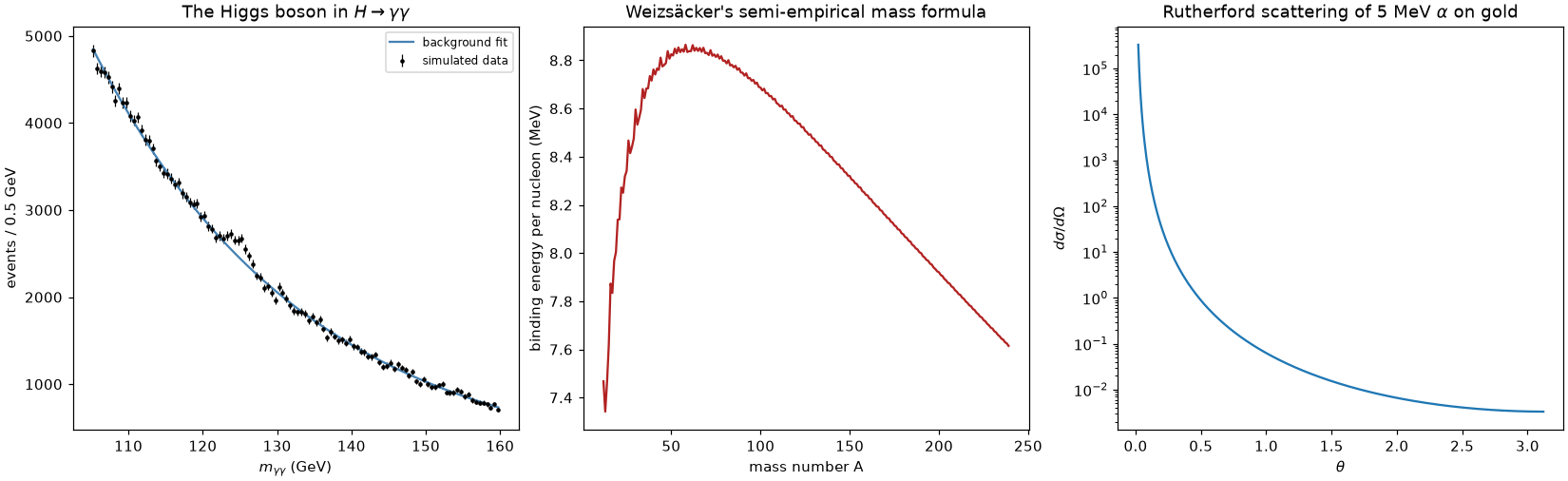
physicskit.plasma– single-particle motion, magnetohydrodynamics, cold-plasma waves, kinetic theory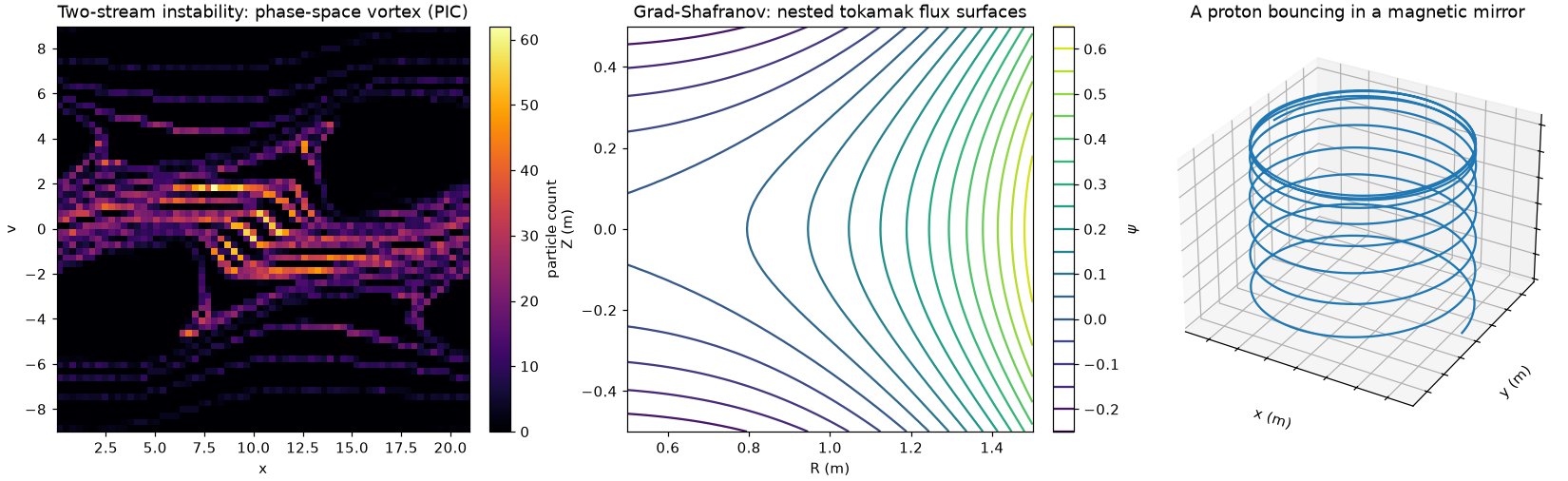
physicskit.quantum– quantum mechanics: wave packets, potentials, entanglement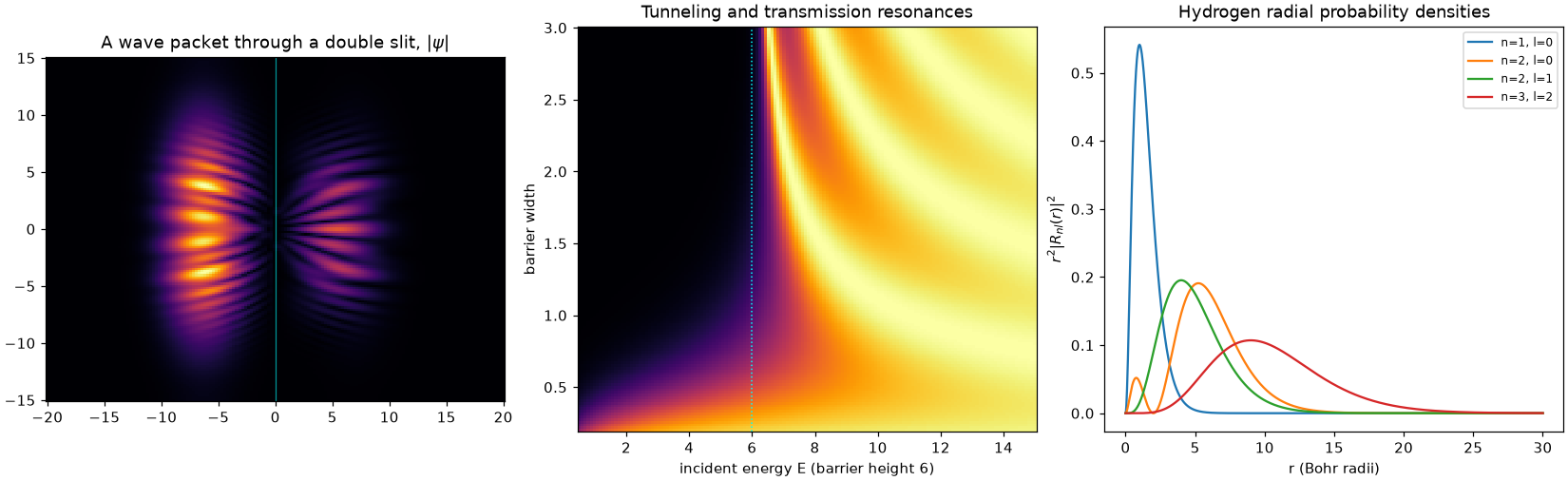
physicskit.relativity– numerical general relativity: black holes, lensing, gravitational waves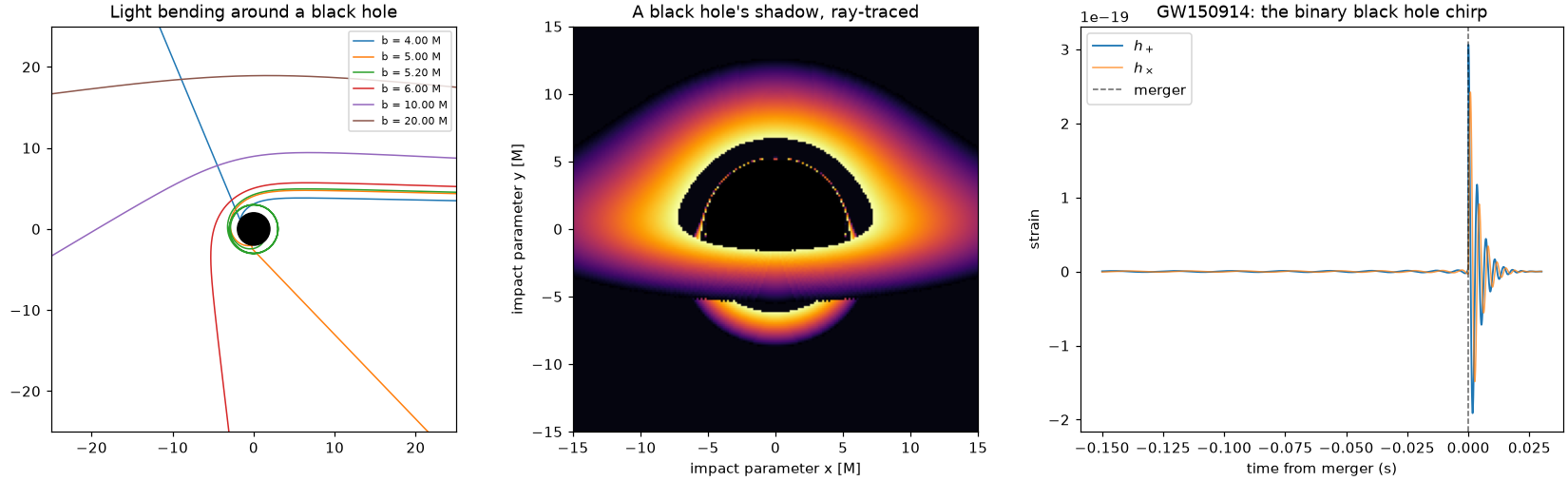
physicskit.rmt– random matrix theory, organized around Dyson’s threefold way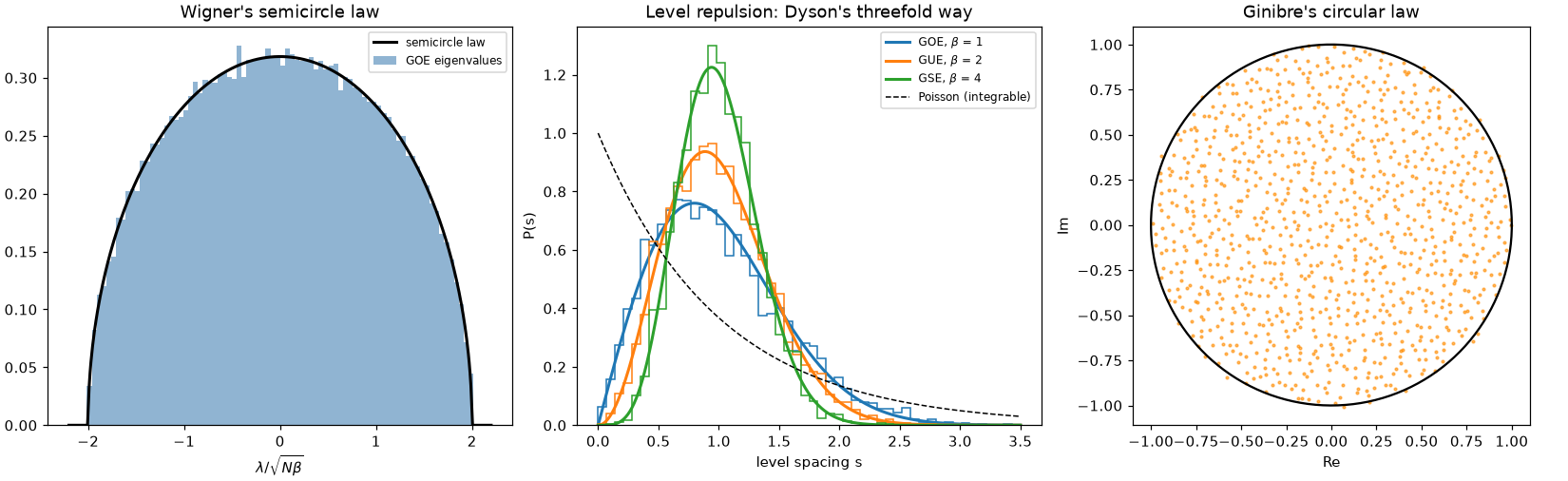
physicskit.semiclassical– WKB/EBK quantization, semiclassical propagators, the Gutzwiller trace formula, and quantum scarring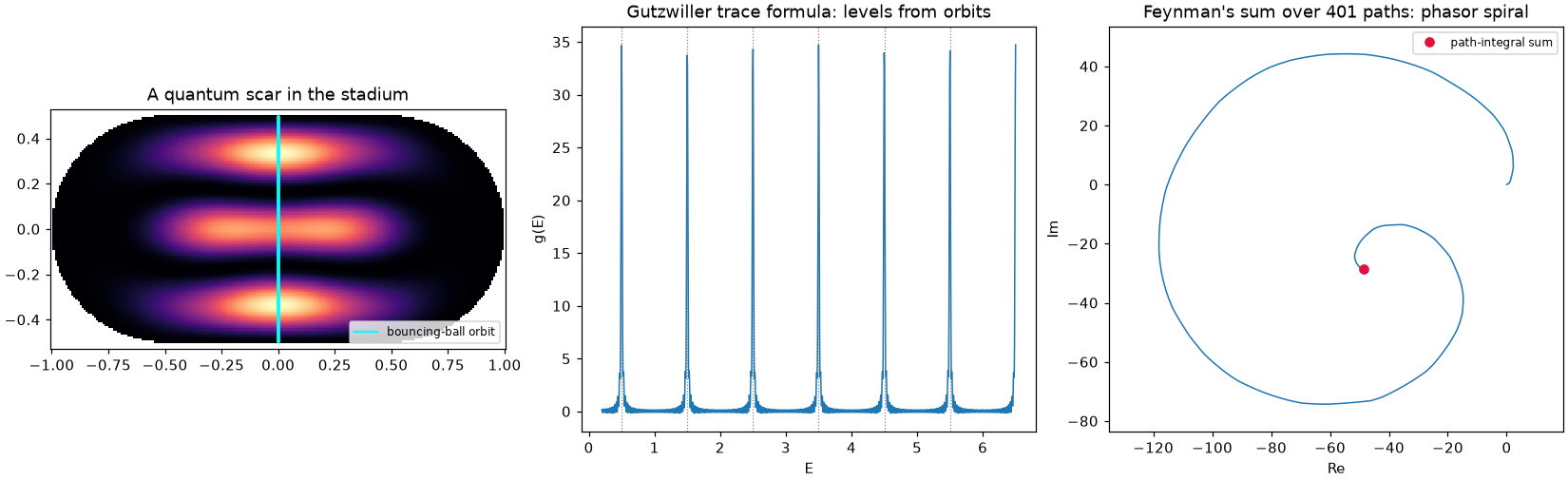
physicskit.statphys– statistical mechanics: lattice models, molecular dynamics, criticality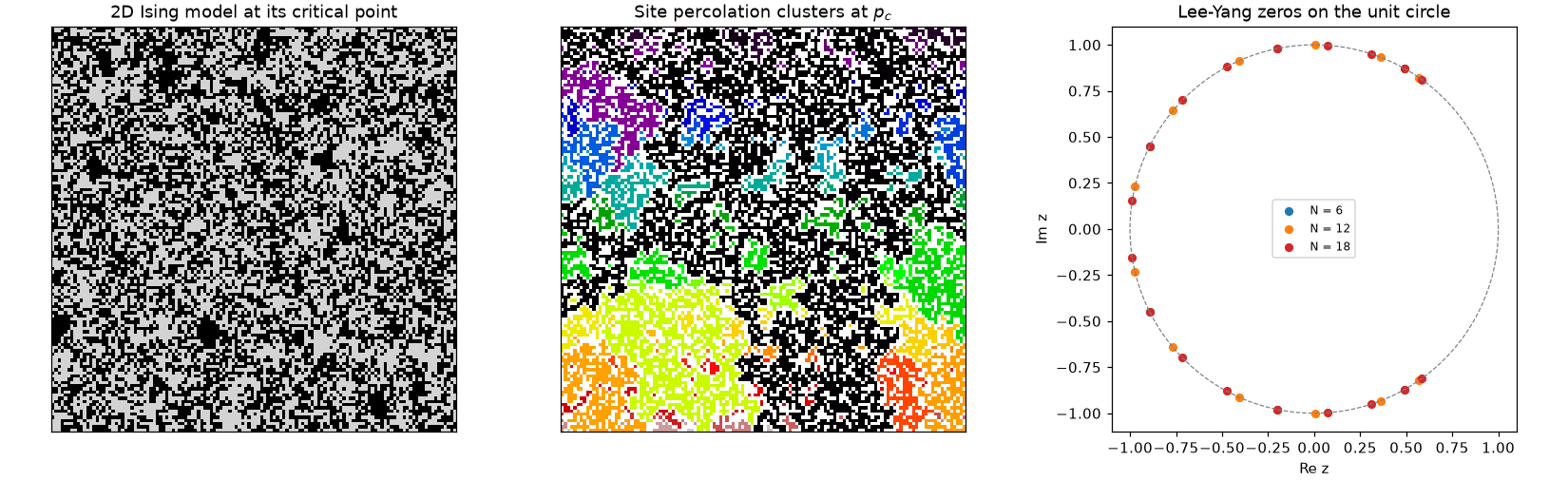
Important
Each domain is a teaching-depth subset of its field, not a complete implementation. physicskit is not a replacement for specialist libraries in production work: for that, use the dedicated tools (SciPy, QuTiP, Astropy, REBOUND, Kwant, PlasmaPy, and the like) directly.
physicskit is part of a family of packages – physicskit,
mathematicskit and
chemistrykit – that share the
same architecture, API conventions, and history-driven documentation.
For tight-binding models beyond physicskit.condensed – arbitrary
finite lattices, ribbons and defects, non-Hermitian bands, Landauer
transport, and the kernel polynomial method for very large samples –
see the dedicated package tbkit.
Conventionally imported as pk:
import physicskit as pk
import numpy as np

H = lambda k1, k2: pk.condensed.haldane_model(k1, k2, phi=np.pi / 2)
chern_numbers = pk.condensed.compute_chern_number(H, grid_size=30)
print(chern_numbers)  # [1, -1]
Related toolkits
Sibling Python toolkits for learning and teaching, built the same way:
blockchainkit – cryptography, consensus and blockchain systems
chemistrykit – computational chemistry
engineeringkit – computational engineering
financialkit – quantitative finance
mathematicskit – computational mathematics
tbkit – tight-binding models, band topology and quantum transport