
Examples#
This gallery walks through blockchainkit.fraud, one experiment per
breakthrough on the fraud history page:
Ponzi schemes from Ponzi’s own to Ethereum’s and BitConnect; Benford’s law;
proofs of reserves, liabilities and solvency, Mt. Gox and FTX; scam
contracts whose verified source deceives, from honeypots to the Squid Game
token, and ICO exit scams; the Willy bot, pump-and-dumps and wash trading;
and approval phishing and address poisoning.
Each script is self-contained and runs with
python examples/fraud/<section>/<script>.py.
Fabricated figures#
How the leading digits of honest numbers betray invented ones.
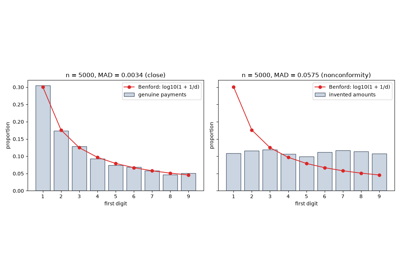
Benford’s law: detecting fabricated figures (1938)
Market manipulation#
Moving prices with unbacked money, coordinated crowds, and trades with oneself.
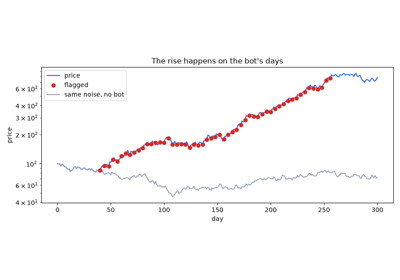
Gandal et al.: price manipulation in the Bitcoin ecosystem, the Willy bot (2018)
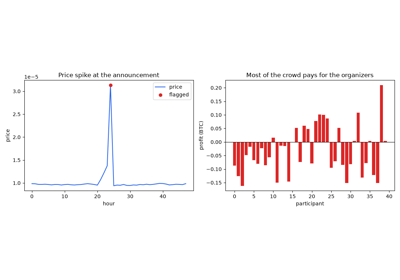
Xu and Livshits: the anatomy of a cryptocurrency pump-and-dump (2019)
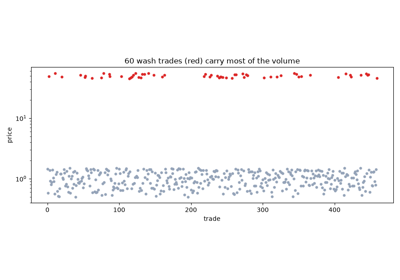
Von Wachter et al.: wash trading in NFT markets (2022)
Phishing#
Taking funds without stealing keys: allowances and look-alike addresses.
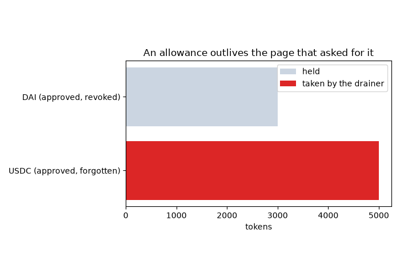
Approval (“ice”) phishing on ERC-20 allowances (2022)
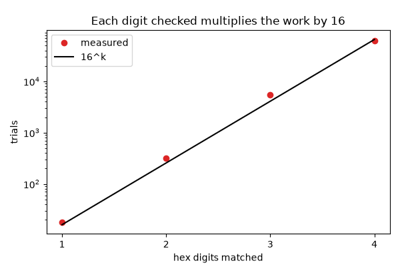
Address poisoning with look-alike addresses (2022-2023)
Scam contracts#
Contracts whose source deceives the reader who checks it, and token sales that vanish.
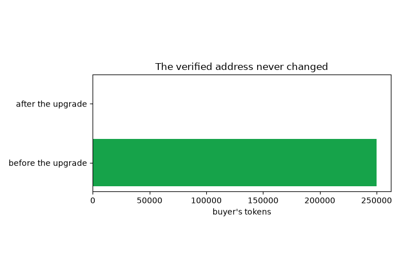
Verified source code, and why a verified source can still deceive (2016)
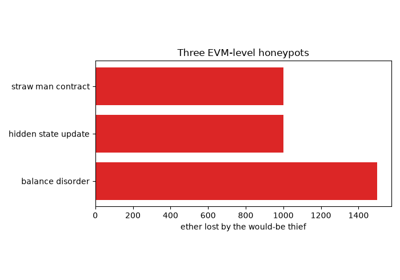
Torres et al.: honeypot contracts that trap would-be thieves (2019)
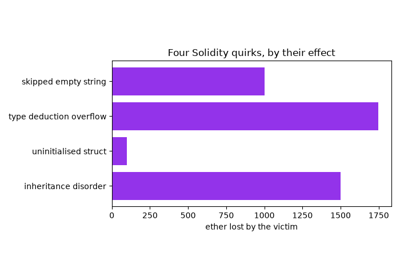
Torres et al.: the Solidity quirks honeypots exploit (2019)
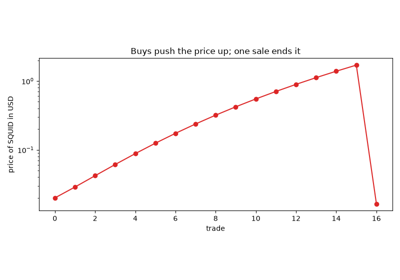
Rug pulls and hidden-mint tokens: the Squid Game token (2021)
Ponzi schemes#
Paying old investors with new money, on paper, in contracts, and on lending platforms.
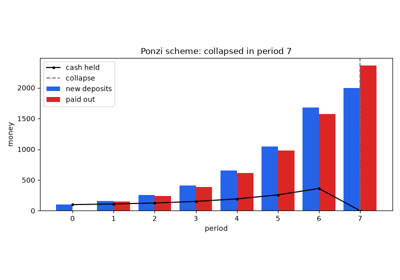
Ponzi’s scheme: paying old investors with new money (1920)
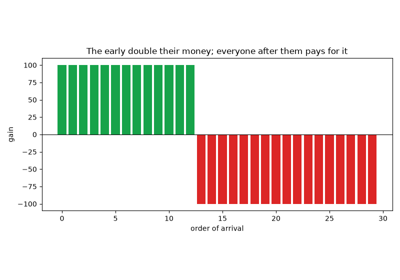
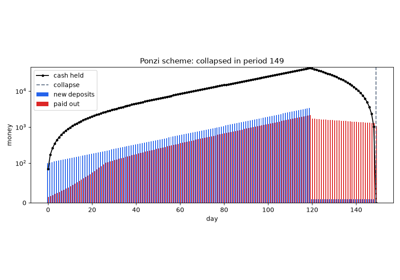
Bartoletti et al.: dissecting Ponzi schemes on Ethereum (2017)
Custodians and solvency#
Exchanges that hold their customers’ coins, how they fail, and how they can prove they have not.
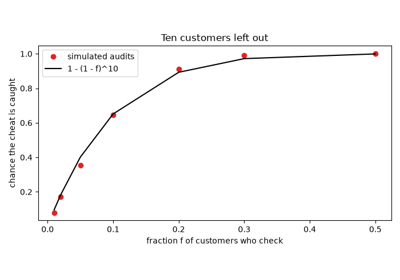
Maxwell’s Merkle-sum-tree proof of reserves (2013)
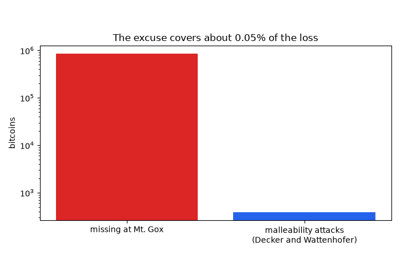
The Mt. Gox collapse and the malleability excuse (2014)
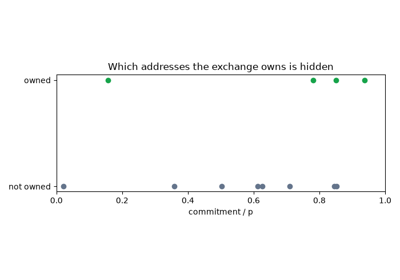
Provisions: privacy-preserving proofs of solvency (2015)
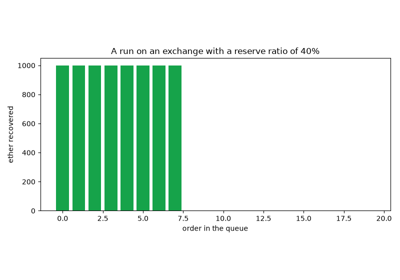
FTX, commingled customer funds, and proof of liabilities (2022)