
Examples#
This gallery walks through every public feature of engineeringkit.aerodynamics,
one breakthrough per script: dynamic pressure and force coefficients,
circulation lift, airfoil sections, finite wings, cruise performance,
boundary layers, compressible flow and the standard atmosphere.
Units, assumptions and numerical validation
gives the physical validity limits. Each script is self-contained and can be
run directly with python examples/aerodynamics/<section>/<script>.py.
Sections#
forces – Bernoulli’s dynamic pressure, Cayley’s lift/drag split, Lilienthal’s coefficients and the Wrights’ correction of Smeaton’s coefficient.
circulation – the Kutta-Joukowski theorem on a spinning cylinder.
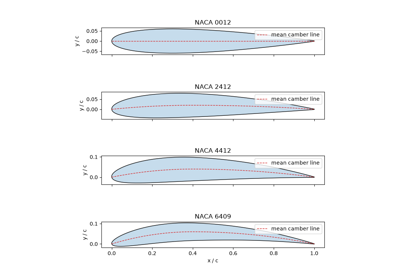
airfoils – NACA four-digit sections, thin-airfoil lift and pitching moment, and the Hess-Smith panel method.
wings – Prandtl’s lifting line, Glauert’s Fourier solution, induced drag and the Oswald drag polar.
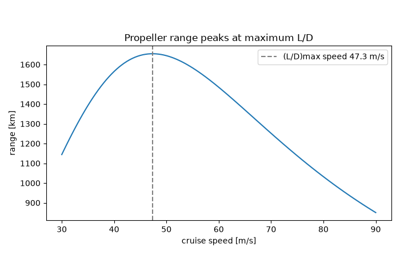
performance – the jet and propeller Breguet range equations.
boundary_layer – Reynolds similarity, the Blasius layer and turbulent skin friction.
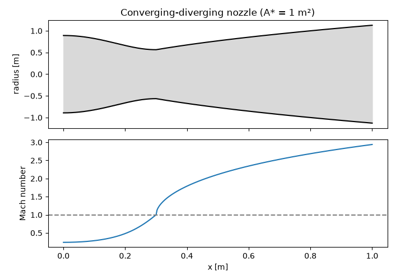
compressible – sound speed, the Mach cone, stagnation states, Prandtl-Glauert, normal and oblique shocks, the Prandtl-Meyer expansion, the de Laval nozzle, and Fanno and Rayleigh duct flow.
atmosphere – the International Standard Atmosphere.
Airfoils#
NACA four-digit section geometry, thin-airfoil lift and pitching moment, and the Hess-Smith panel method.
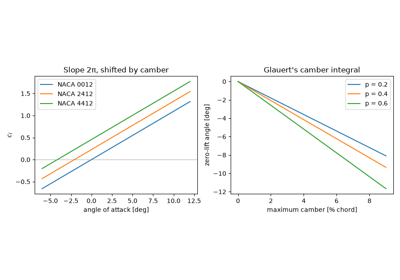
Thin-airfoil theory: lift slope 2π and the camber shift (1922-1926)
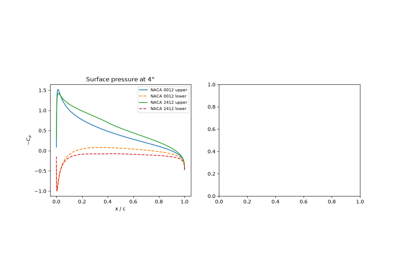
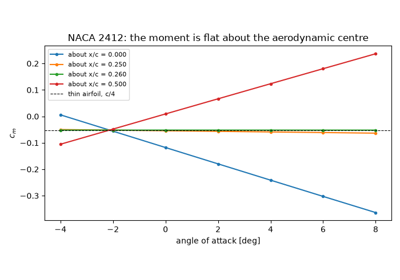
Thin-airfoil pitching moment and the aerodynamic centre (1922-1926)
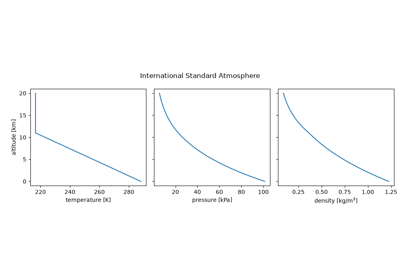
Standard atmosphere#
Temperature, pressure and density with altitude.
Boundary layers#
Reynolds-number similarity and laminar/turbulent flat-plate friction.
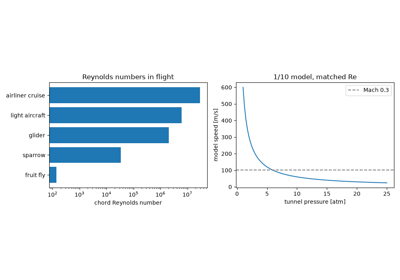
Reynolds’ dimensionless number and wind-tunnel similarity (1883)
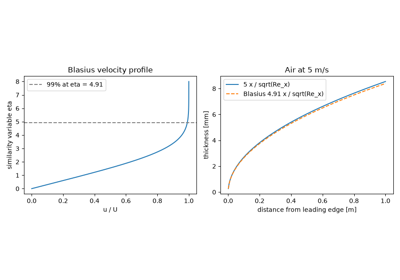
Prandtl’s boundary layer and the Blasius solution (1904-1908)
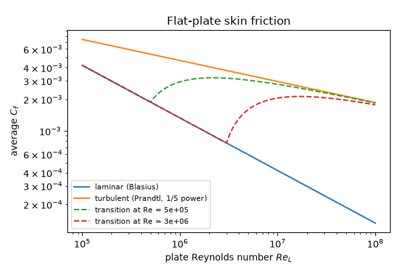
Turbulent skin friction and the one-fifth-power law (1927)
Circulation#
Lift as the product of density, speed and circulation.
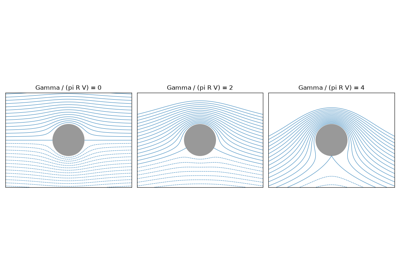
The Kutta-Joukowski theorem on a spinning cylinder (1902-1906)
Compressible flow#
Sound speed, Mach waves, isentropic stagnation states, compressibility corrections, normal and oblique shocks, Prandtl-Meyer expansions, nozzles, and Fanno and Rayleigh duct flow.
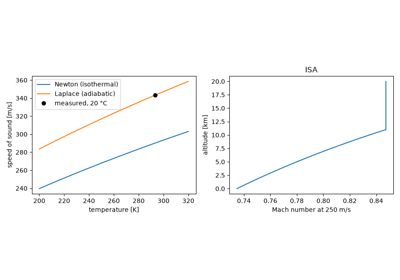
Newton, Laplace and the speed of sound (1687-1816)
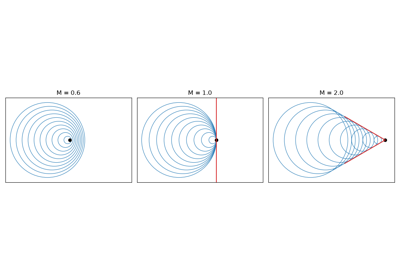
Ernst Mach’s shock photographs and the Mach cone (1887)
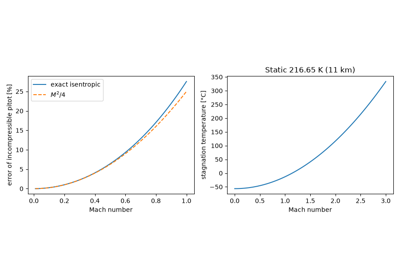
Saint-Venant and Wantzel: isentropic stagnation states (1839)
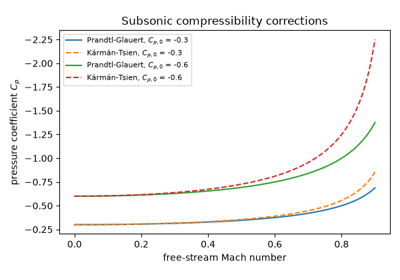
The Prandtl-Glauert compressibility correction (1928)
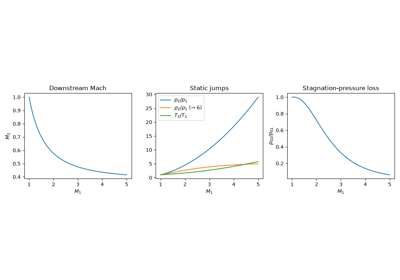
Rankine-Hugoniot jump conditions across a normal shock (1870-1889)
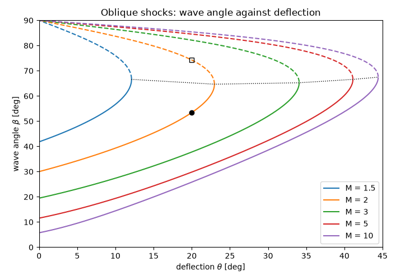
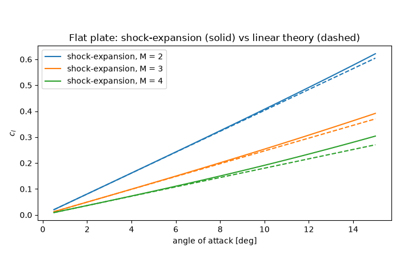
Meyer’s oblique shock and the theta-beta-M relation (1908)
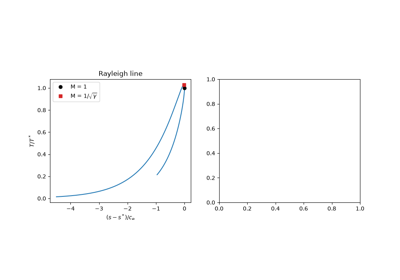
Rayleigh flow: heat addition and thermal choking (1910)
Forces and coefficients#
Dynamic pressure, the lift/drag decomposition and dimensionless force coefficients.
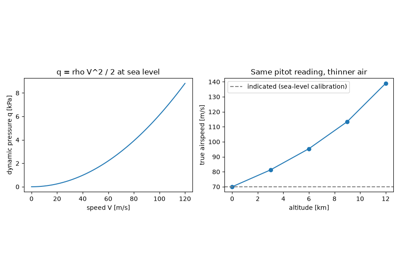
Bernoulli’s dynamic pressure and the pitot-static airspeed (1738)
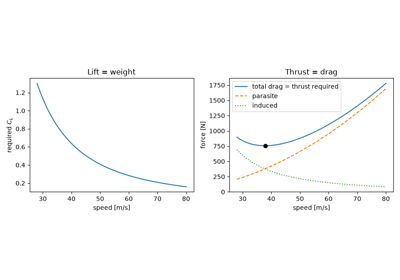
Cayley’s separation of lift and drag in level flight (1809)
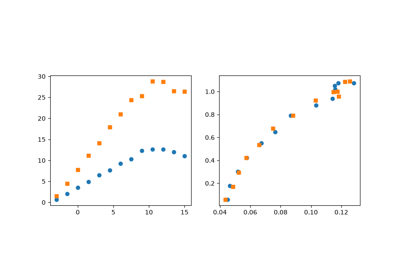
Lilienthal’s lift and drag coefficients and the polar diagram (1889)
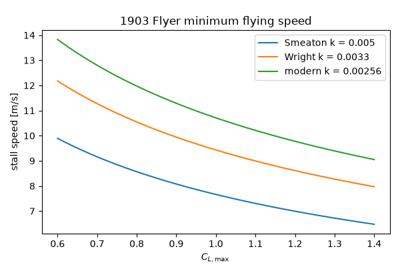
The Wright brothers, Smeaton’s coefficient and the stall speed (1901)
Performance#
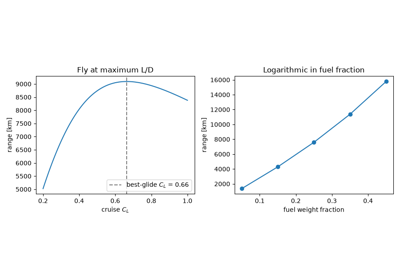
Jet and propeller cruise range from aerodynamic efficiency and engine fuel consumption.
Finite wings#
Lifting-line theory and Glauert’s Fourier solution, induced drag and the parabolic drag polar.
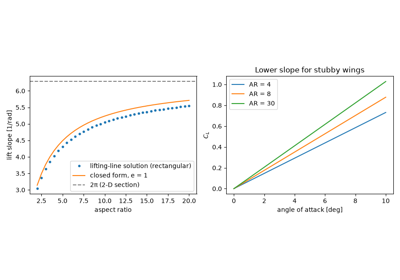
Prandtl’s lifting-line theory and the finite-wing lift slope (1918)
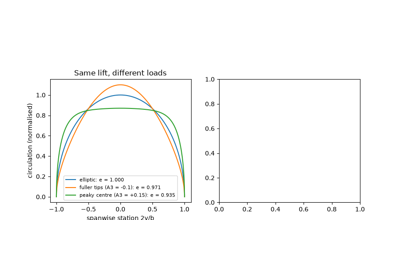
Induced drag and the optimality of elliptic loading (1918-1921)
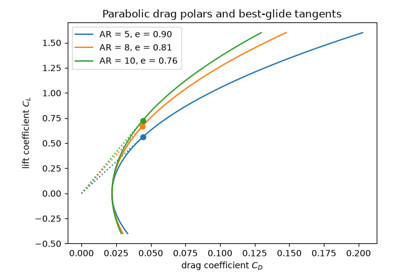
Oswald’s efficiency factor and the parabolic drag polar (1933)
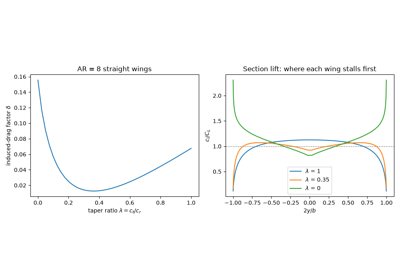
Glauert’s Fourier solution of the lifting line for any planform (1926)