

Topology#
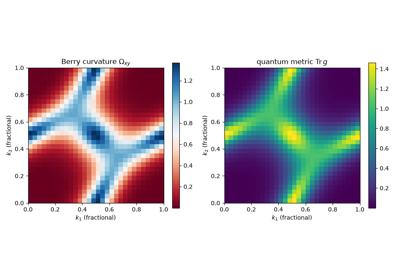
Topological band theory: the SSH model’s bulk-boundary correspondence and its Zak phase, the Haldane model’s Chern-number phase transition and Berry curvature, the TKNN quantized Hall conductance of the Hofstadter bands, Kane-Mele helical edge states cut from ribbons, the Kane-Mele Z2 invariant from Wannier-centre flow and the Fu-Kane parity criterion, the surface Dirac cone of a 3D topological insulator (surface spectral function of a semi-infinite crystal), the Thouless quantum pump’s exactly quantized charge transport, a topological (Chern) flat band on the kagome lattice, the quantum metric of a Bloch band, the local Chern marker of a disordered flake, the Bott index of a disordered torus, the entanglement spectrum of a cut SSH ring and Haldane cylinder, the spin Chern number of the Kane-Mele model with Rashba coupling, the mirror Chern number of a topological crystalline insulator, the four Z2 indices of strong and weak 3D topological insulators, the axion angle pumped by 2 pi around a cycle of a lattice Dirac model, the tenfold-way classification of tight-binding models by their symmetries, and the diabolical points (conical intersections with a Berry phase of pi) of a two-parameter family.
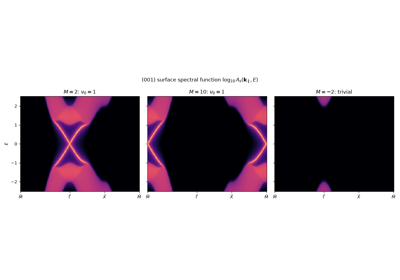
Three-Dimensional Topological Insulators: the Surface Dirac Cone
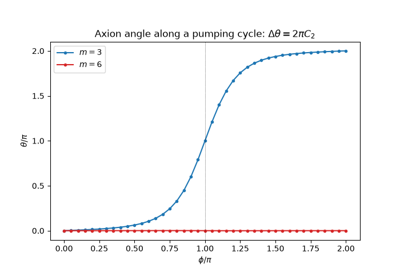
The Axion Angle and the Topological Magnetoelectric Effect
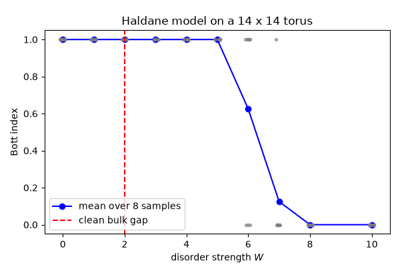
The Bott Index: the Chern Number of a Disordered Torus
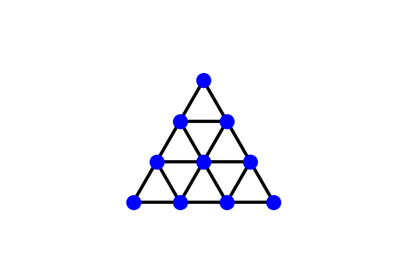
Diabolical Points: Conical Intersections in a Two-Parameter Family
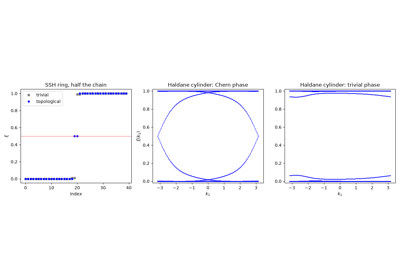
The Entanglement Spectrum: Edge States Without an Edge
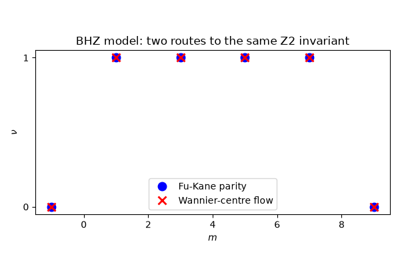
The Fu-Kane Parity Criterion: Z2 from Inversion Eigenvalues
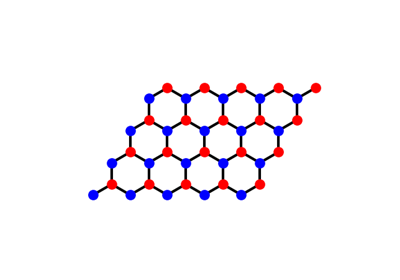
The Haldane Model: Berry Curvature and a Topological Phase Transition
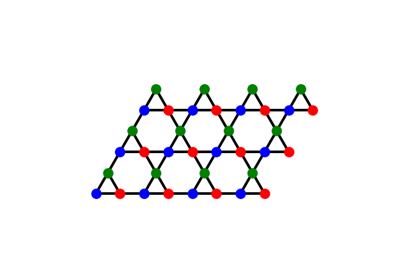
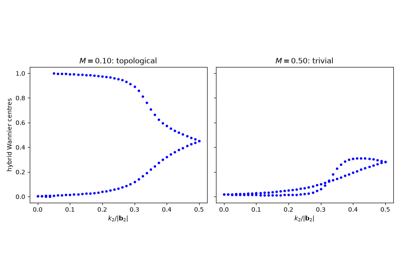
The Kane-Mele Z2 Invariant from Wannier-Centre Flow
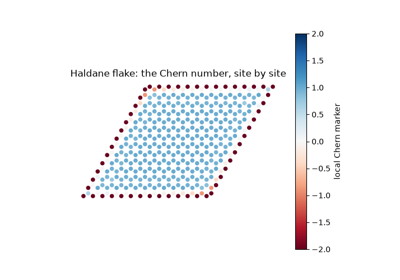
The Local Chern Marker: Topology Without a Brillouin Zone
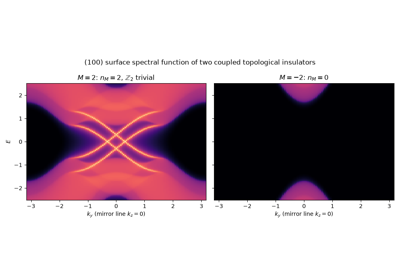
Mirror Chern Numbers: a Topological Crystalline Insulator
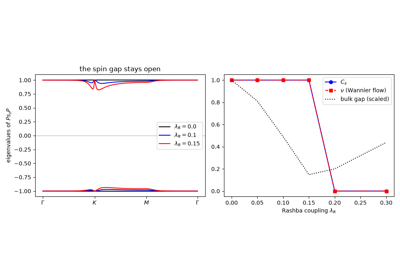
The Spin Chern Number: Quantum Spin Hall Without Spin Conservation
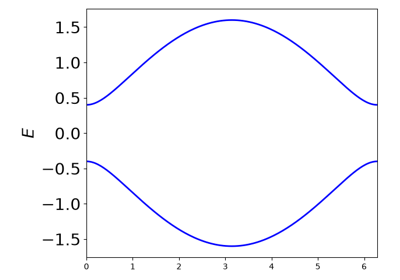
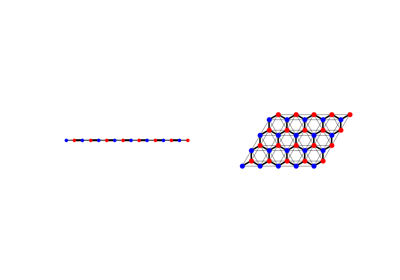
The Tenfold Way: Symmetry Classes of Tight-Binding Models
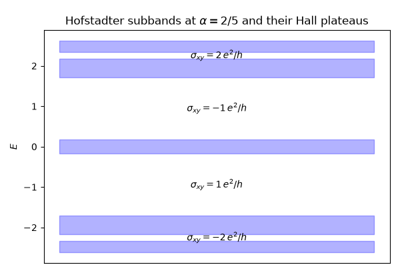
TKNN: The Quantized Hall Conductance of the Hofstadter Bands
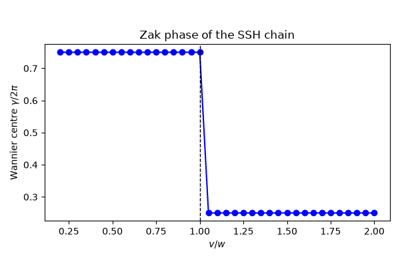
The Zak Phase: Where the SSH Chain’s Electrons Sit